














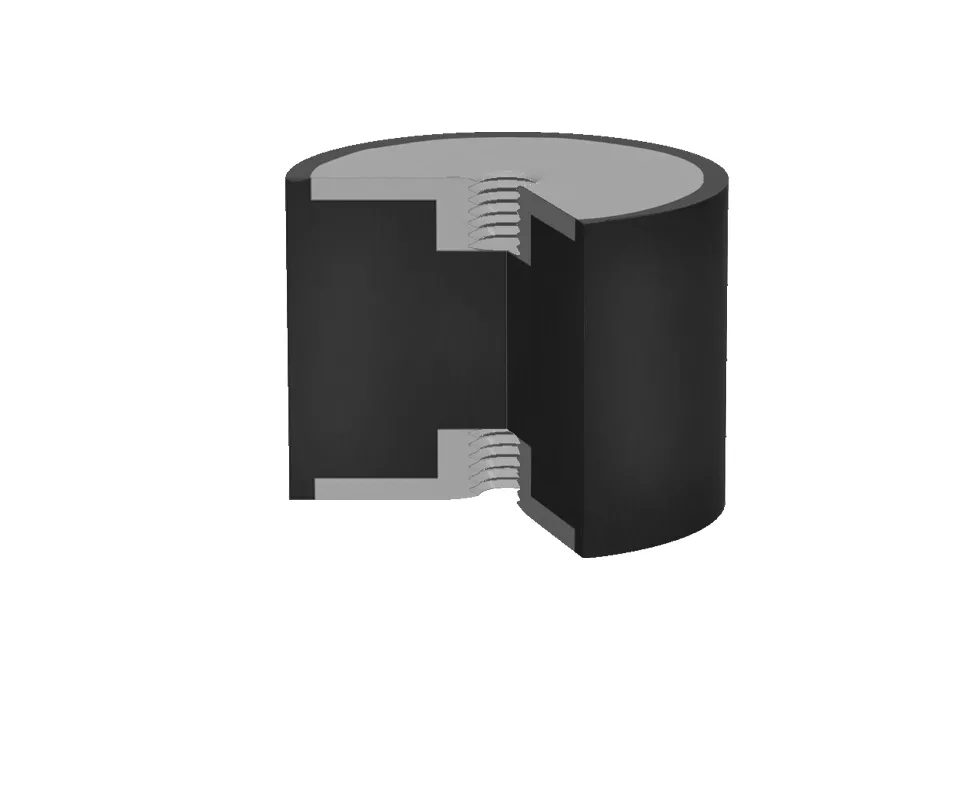
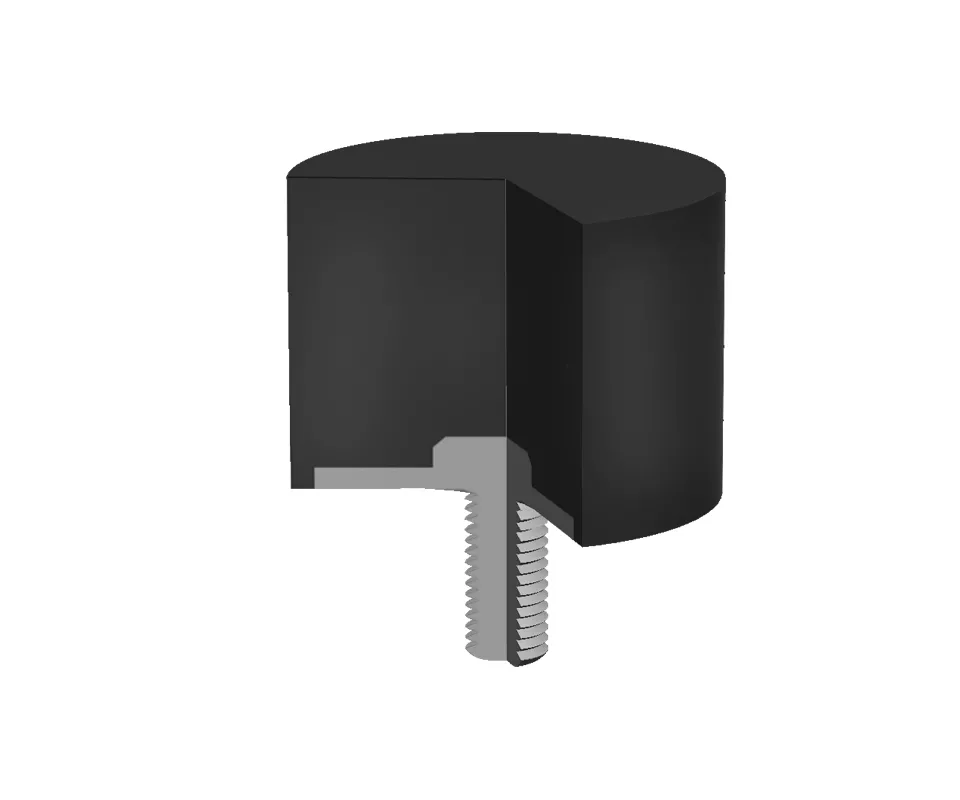
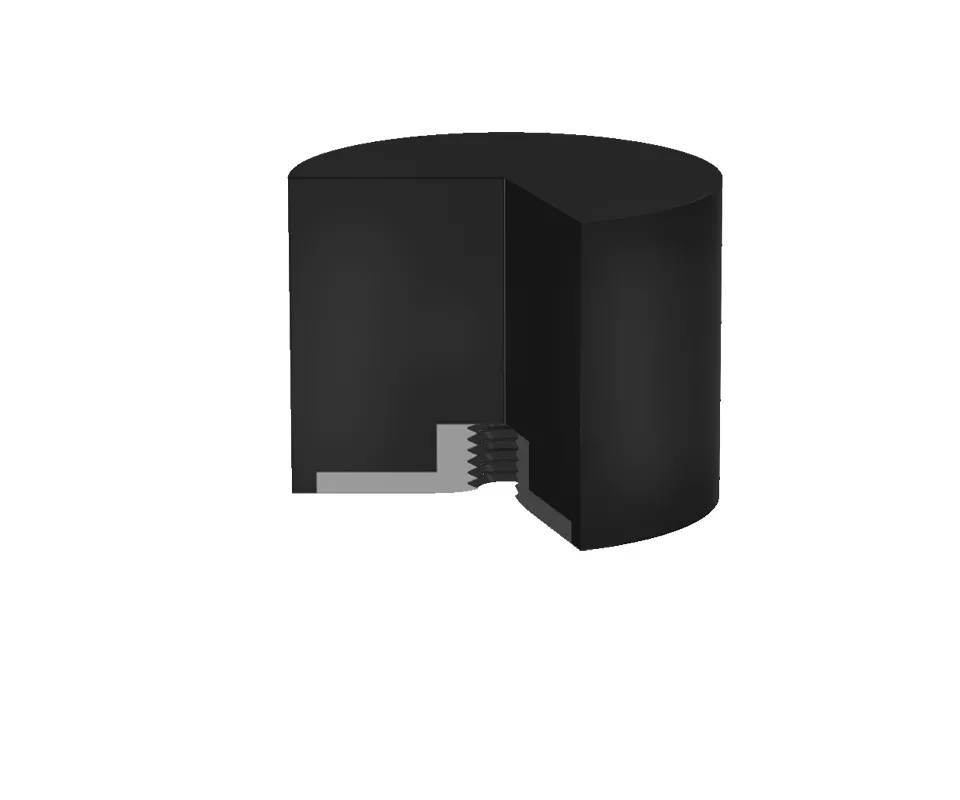














What exactly is a silent block?
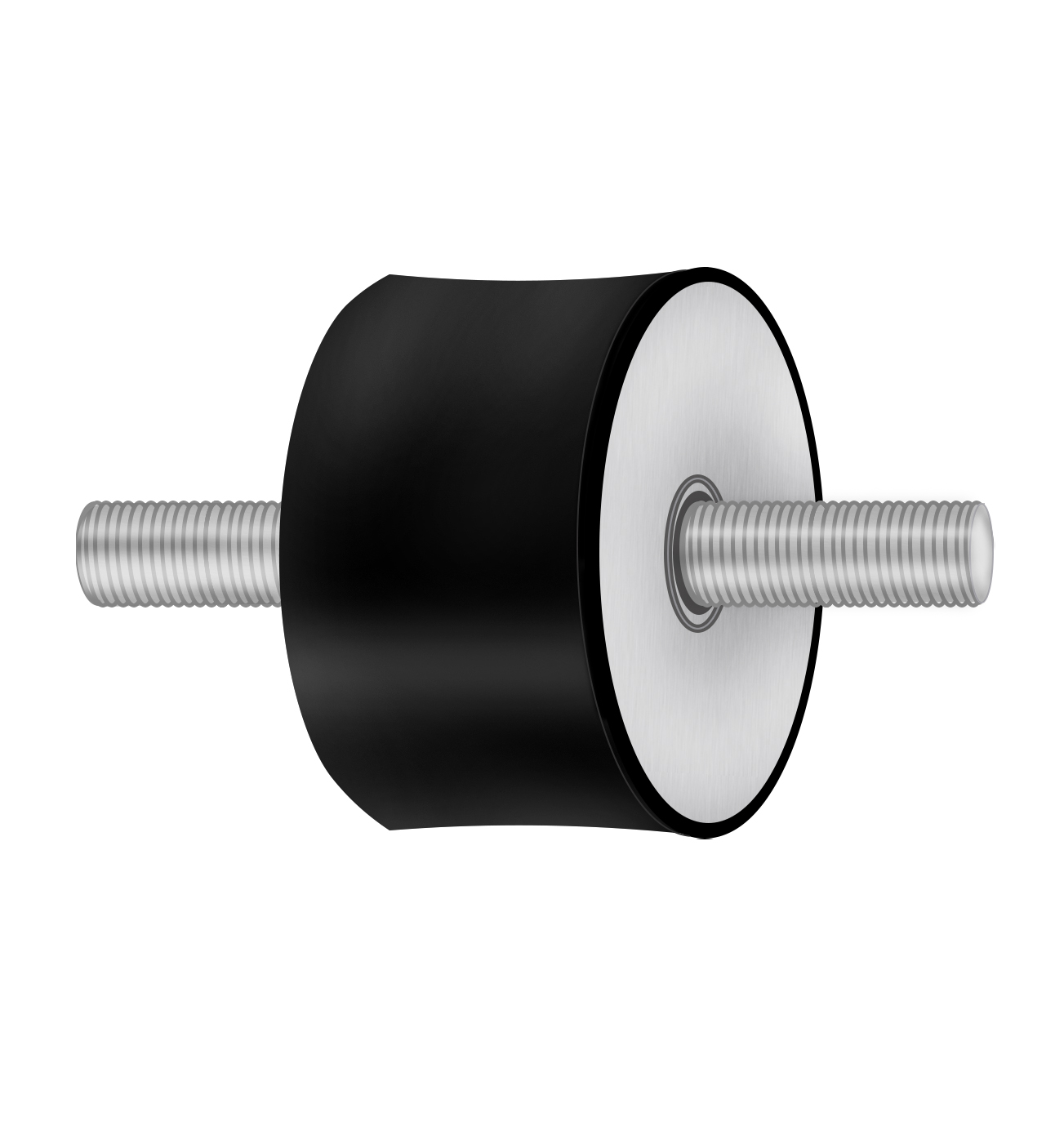
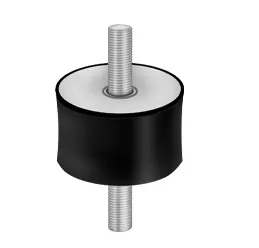
Put simply, it is a rubber-metal anti-vibration element. It is sometimes also referred to as a ‘deformation damper’. In order to fulfil its purpose, it must be made from a material with what is known as high internal damping. Generally speaking, silent blocks are suitable for absorbing oscillatory motion with a small amplitude. Individual silent blocks also differ in shape, amongst other things. In industry, silent blocks are standardised or come in sleeve, conical, spool, spherical or complex shapes. It depends on the specific application.
Not all ‘rubber is the same’; the correct term is – technical rubber!
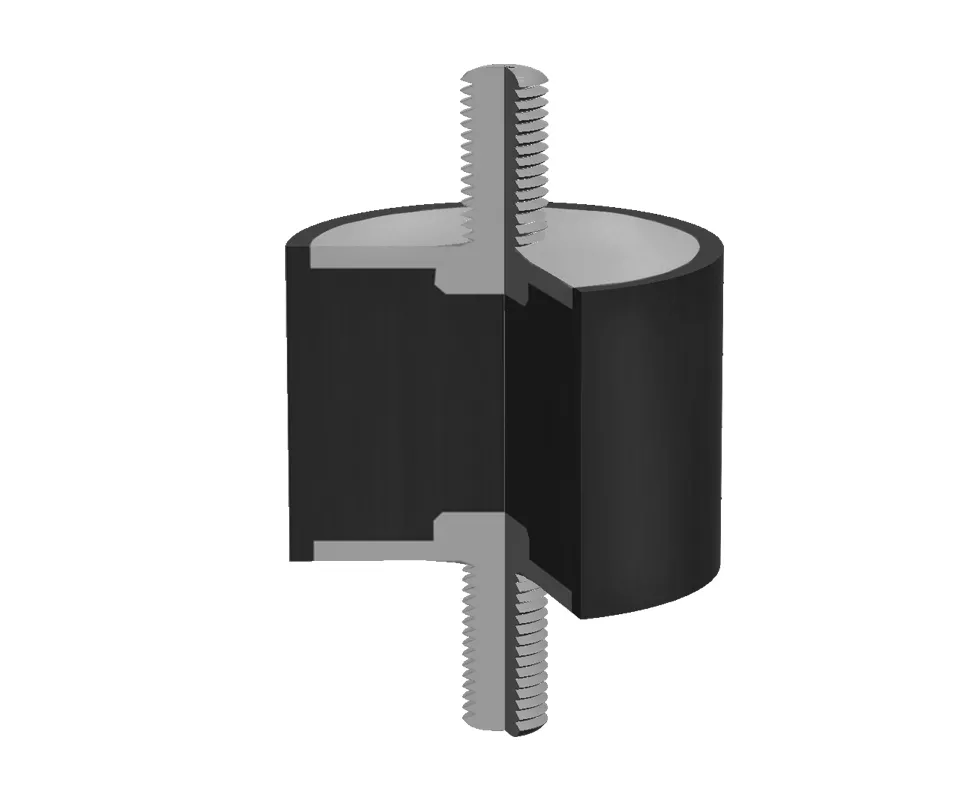
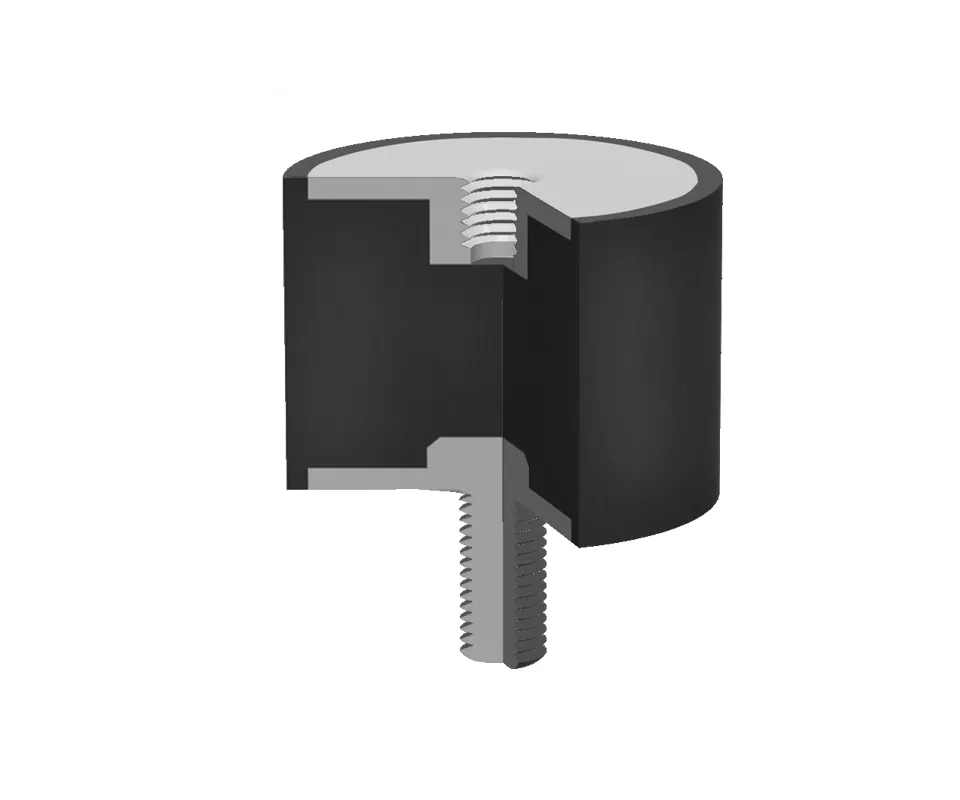
A classic silent block consists of metal parts and a rubber cylinder. The space between the two metal parts is filled with rubber. Rubber is an organic/synthetic compound (depending on the type of rubber), and six different types are commonly used in silent blocks. The most common are SBR, or Buna (Styrene Butadiene), and NBR, which is Nitrile Butadiene (Perbunan). However, in the context of silent blocks, other types of rubber are also used, such as natural rubber (NR), chloroprene or neoprene (CR), or silicone (VMQ). Each of these materials has different properties. In terms of mechanical properties, they differ in tensile strength and elongation. The former is measured in N/mm², the latter is given as a percentage. For example, SBR has a tensile strength of 7 to 25 N/mm² and elongation of 100 to 450 per cent. Resistance to oil, petrol, ozone and acids is also assessed. Depending on where the silent block is to be used, designers select the appropriate rubber.