Categories
-
-
-
-

-
-
-
Loctite and Teroson adhesives
![Loctite and Teroson adhesives]()
-
silicones, flexible sealants and rubbers
![silicones, flexible sealants and rubbers]()
-
threadlockers
![threadlockers]()
-
retaining compound
![retaining compound]()
-
flange sealants
![flange sealants]()
-
pipe sealants
![pipe sealants]()
-
activators and primers
![activators and primers]()
-
metal-filled compounds
![metal-filled compounds]()
-
cleaners and degreasants
![cleaners and degreasants]()
-
lubrications
![lubrications]()
-
surface treatment, rust removers
![surface treatment, rust removers]()
-
car glass repair
![car glass repair]()
-
plastic repair
![plastic repair]()
-
cleaning and hygiene products
![cleaning and hygiene products]()
-
detectors
![detectors]()
-
fixing lacquers, seals
![fixing lacquers, seals]()
-
tapes
![tapes]()
-
casting compounds
![casting compounds]()
-
insulation materials
![insulation materials]()
-
dosing needles and mixers
![dosing needles and mixers]()
-
Loctite and Teroson adhesives
-

-

-
-
-
-
-
-
-
-
-
-
-




























Bearing 6009
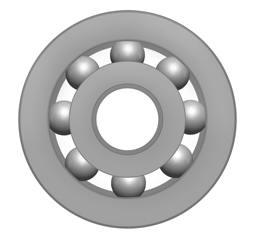
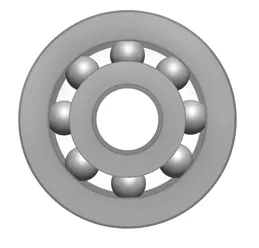
The 6009 bearing is a single-row ball bearing measuring 45 × 75 × 16 mm (inner diameter 45 mm, outer diameter 75 mm, width 16 mm). We stock 13 variants, 12 of which are in stock and ready for dispatch within 24 hours. Prices start at 85 Kč and vary depending on the manufacturer and variant.
Dimensions and interchangeability
The designation 6009 is an international standard (ISO 15), so a 6009 bearing from any manufacturer will always have the same dimensions of 45 × 75 × 16 mm and is mechanically interchangeable. They differ only in seal design, clearance, precision and service life. When replacing a worn part, you can therefore choose a different brand to the one originally fitted in the machine.
Variants we stock
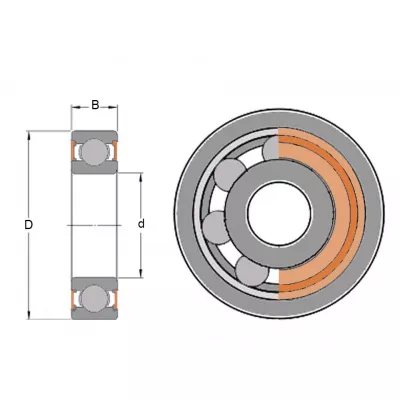
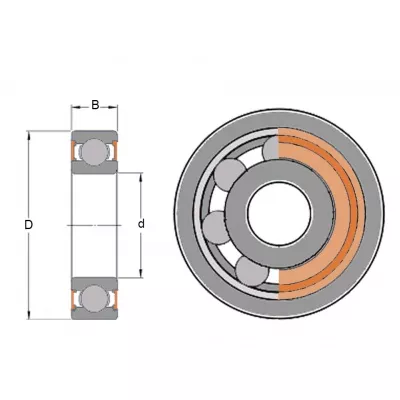
- 6009 2RS – double-sided rubber seals – for dusty and damp environments
- 6009 2RS1 – double-sided rubber seal (SKF designation)
- 6009 LLU – double-sided rubber seal (NTN designation)
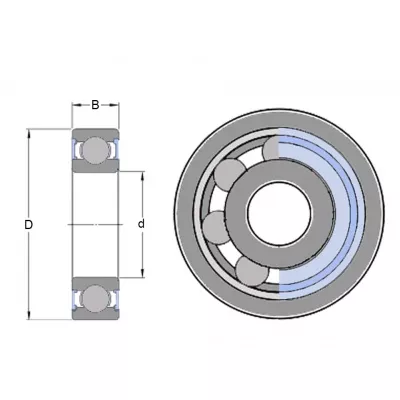
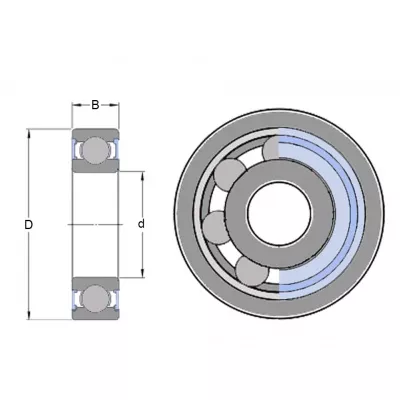
- 6009 2Z – double-sided metal cover – lower friction, higher speeds
- 6009 ZZ – double-sided sheet metal cover (NTN designation)
- 6009 N – retaining ring groove on the outer ring
Without a suffix, this is an open bearing without seals — the most economical option for clean and permanently lubricated applications.
Manufacturers
For the 6009 designation, we offer SKF, NTN, ZVL, ZKL and IBB brands. ZVL or ZKL are sufficient for standard operation; for demanding and high-speed applications, we recommend SKF or NTN.
How to choose
The dimensions are identical for all 6009 bearings, so the choice depends on the environment: 2RS sealed bearings for dusty and damp conditions; 2Z open bearings for clean and high-speed applications; and C3 clearance for heating or press-fitting. If you’re unsure, we can advise you based on the machine and the original part — tel: 270 003 620. You can find details on bearing designations in the guide ‘How to Choose a Bearing’.
There are 13 products.